Indian History Questions

Q:

What is the name of the literary genre developed by the Khojas who are a branch of the Ismaili sect?


A) Ginan B) Ziyarat
C) Raag D) Shahada
 
Answer & Explanation Answer: A) Ginan

Explanation:

Ginans are devotional hymns or poems recited by Shia Ismaili Muslims.Although ginanscan be recited, studied, and listened to by non-Nizari Ismailis, ginans hold a special role in the cultural practice and rituals of Nizari Ismailis, specifically the community of Khojas, a caste of south asians of whom the majority now identify as Nizari Ismaili.


Report Error

View Answer Report Error Discuss

Filed Under: Indian History
Exam Prep: Bank Exams

0 44287
Q:

The first newspaper published in India in 1780 was

A) The Bengal Gazette or Calcutta General Advertiser B) The Calcutta Chronicle
C) The Madras Courier D) The Bombay Herald
 
Answer & Explanation Answer: A) The Bengal Gazette or Calcutta General Advertiser

Explanation:
Report Error

View Answer Report Error Discuss

Filed Under: Indian History

204 43039
Q:

The all India Census was

1.first attempted in 1872

2.regularly undertaken since 1881

3.always undertakenas a five-year exercise


Select the correct answer using the code given below.

A) 1 only B) 2 and 3 only
C) 1 and 2 only D) 1, 2 and 3
 
Answer & Explanation Answer: C) 1 and 2 only

Explanation:

While it has been conducted every 10 years, beginning in 1872, the first completecensus was taken in the year 1881. Post 1949, it has been conducted by the Registrar General and Census Commissioner of India under the Ministry of Home Affairs, Government of India.

Report Error

View Answer Report Error Discuss

Filed Under: Indian History
Exam Prep: Bank Exams

3 42773
Q:

Who was the first indian ruler to apply the western methods to his administration?

A) Haider Ali B) Tipu Sultan
C) Murshid Quil Khan D) Malhar Rao Holkar
 
Answer & Explanation Answer: B) Tipu Sultan

Explanation:

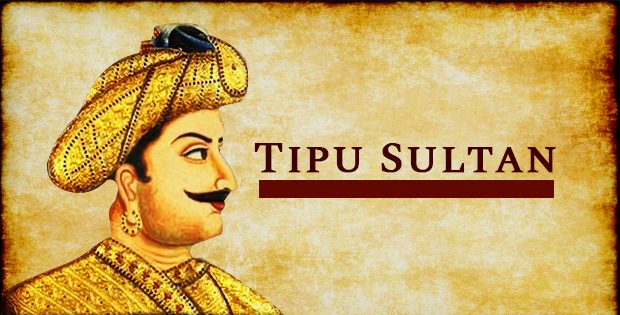
Tipu Sultan was the first indian ruler to apply the western methods to his administration. Sultan Fateh Ali Sahab Tipu, also known as the Tipu Sahib, was a ruler of the Kingdom of Mysore. He was the eldest son of Sultan Hyder Ali of Mysore.

Tipu-Sultan1533103459.jpg image

Tipu Sultan introduced a number of administrative innovations during his rule, including his coinage, a new Mauludi lunisolar calendar, and a new land revenue system which initiated the growth of the Mysore silk industry.

He was one of the few South Indian kings to provide stiff resistance to British imperialism, along with Hyder Ali. He is applauded as a ruler who fought against British colonialism. Similarly he has been a controversial figure and criticized for his atrocities against Hindus, Christians, and Mappla Muslims.


Report Error

View Answer Report Error Discuss

Filed Under: Indian History
Exam Prep: Bank Exams , CAT
Job Role: Analyst , Bank Clerk , Bank PO , Database Administration

7 42425
Q:

Which State is called the ' Cradle of Buddhism '?

A) Sikkim B) Bihar
C) Uttar Pradesh D) Madhya Pradesh
 
Answer & Explanation Answer: B) Bihar

Explanation:
Report Error

View Answer Report Error Discuss

Filed Under: Indian History

174 41306
Q:

Which of the following is/are the feature(s) of the Brahmadeya Grants during c 600-1200 AD?

1. Their creation meant a renunciation of actual or potential sources of revenue by the State.

2. These grants could vary from a small plot to several villages.

3. Most grants were made in unsettled areas.

Select the correct answer using the code given below.

A) 1 only B) 2 and 3 only
C) 1 and 2 only D) 1, 2 and 3
 
Answer & Explanation Answer: C) 1 and 2 only

Explanation:
The first 2 statements are true with respect to the Brahmadeya Grants during 600-1200 AD.
Report Error

View Answer Report Error Discuss

Filed Under: Indian History
Exam Prep: Bank Exams

0 41053
Q:

Which of the following statements about Sir Syed Ahmad Khan is/are correct?

1. He argued that India was a federation of ethnic communities based on common descent.

2. His philosophy was very similar to that of the Indian National Congress.

3. He imagined India as a Nation State based on individual citizen’s rights.

4. The curriculum at the Mohammedan Anglo-Oriental College blended Muslim theology and European empiricism.

Select the correct answer using the code given below.

A) 1 only B) 2 and 3
C) 3 only D) 1 and 4
 
Answer & Explanation Answer: D) 1 and 4

Explanation:

Statements 1 & 4 are true with respect toSir Syed Ahmad Khan.

Report Error

View Answer Report Error Discuss

Filed Under: Indian History
Exam Prep: Bank Exams

0 40283
Q:

Which of the following statements about the Non-Cooperation Movement is/are correct?

1. It was marked by significant participation of peasants from Karnataka.

2. It was marked by non-Brahmin lower caste participation in Madras and Maharashtra.

3. It was marked by the lack of labour unrest in places like Assam, Bengal and Madras.

4. It was badly shaken by the Chauri Chaura incident in 1922 after which Gandhiji decided to continue with the movement on a much smaller scale.

Select the correct answer using the code given below.

A) 1 only B) 1, 2 and 4
C) 2 and 3 D) 2 only
 
Answer & Explanation Answer: D) 2 only

Explanation:

Non-Brahmin lower caste movement took place in Madras and Maharashtra

Karnataka was not affected by the NCM.

There was labour unrest in Assam, Bengal and Madras

Statement 4 is incorrect as after the Chauri-Chaura incident the movement was completely stopped.

Report Error

View Answer Report Error Discuss

Filed Under: Indian History
Exam Prep: Bank Exams

0 39676