Questions

Q:

Which statement best describes electrons?

A) Electrons orbit around the nucleus B) Electrons are composed of protons and neutrons
C) Electrons reside in the nucleus D) Electrons have a positive charge
 
Answer & Explanation Answer: A) Electrons orbit around the nucleus

Explanation:

Electrons orbit around the nucleus is correct about them.

Report Error

View Answer Report Error Discuss

Filed Under: Chemistry
Exam Prep: AIEEE , Bank Exams
Job Role: Analyst , Bank Clerk

3 3740
Q:

Which year did India hosted and participated in Asian games for the first time ?

A) 1930 B) 1933
C) 1948 D) 1951
 
Answer & Explanation Answer: D) 1951

Explanation:
Report Error

View Answer Report Error Discuss

Filed Under: Sports
Exam Prep: AIEEE , Bank Exams , CAT
Job Role: Bank Clerk , Bank PO

10 3740
Q:

Who is the author of the book The Discovery of India ?

A) Kalhan B) Jawaharlal Nehru
C) Ashapurna Devi D) None
 
Answer & Explanation Answer: B) Jawaharlal Nehru

Explanation:

Jawaharlal Nehru is the author of the book The Discovery of India

Report Error

View Answer Report Error Discuss

Filed Under: Books and Authors

0 3740
Q:

When and where the WHO guidelines titled as "The Consolidated Guidelines on the use of Antiretroviral Drugs for Treating and Preventing HIV Infection" was launched?

Answer

The Guidelines of World Health Organization (WHO) was leanched at the 2013 International AIDS Society Conference held in Kuala Laumpur, Malaysia on June 30, 2013.


Note: It was aimed to provide new guidance on the diagnosis of human immunodeficiency virus (HIV) infection, the care of people living with HIV and the use of antiretroviral (ARV) drugs for treating and preventing HIV infection.

Report Error

View answer Workspace Report Error Discuss

Subject: World Organisations Exam Prep: TOEFL

8 3739
Q:

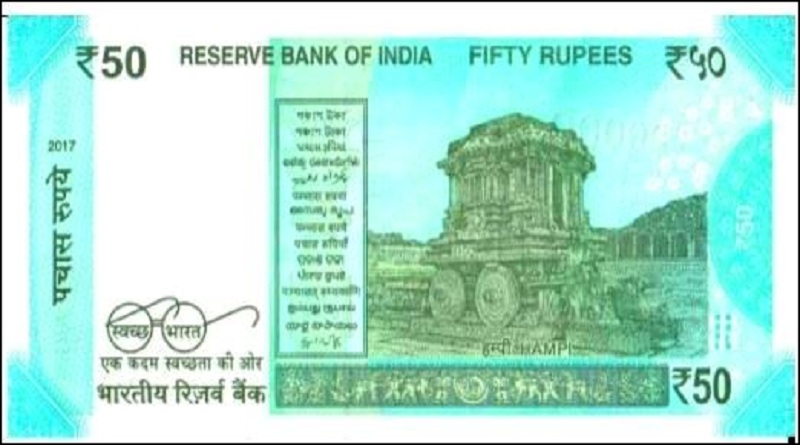
The motif of Hampi with Chariot is printed on the reverse of which currency note?

A) Rs. 100 Note B) Rs. 1000 Note
C) Rs. 50 Note D) Rs. 500 Note
 
Answer & Explanation Answer: C) Rs. 50 Note

Explanation:

The_motif_of_Hampi_with_Chariot_is_printed_on_the_reverse_of_which_currency_note1559552269.jpg image


The motif of Hampi with Chariot is printed on the reverse of New Rs. 50 currency note in India.

Report Error

View Answer Report Error Discuss

Filed Under: General Awareness
Exam Prep: AIEEE , Bank Exams , CAT
Job Role: Analyst , Bank Clerk , Bank PO

4 3739
Q:

Where is the renowned multi-arts centre Bharat Bhavan located?

A) Jaipur B) Bhopal
C) Bangalore D) New Delhi
 
Answer & Explanation Answer: B) Bhopal

Explanation:
Report Error

View Answer Report Error Discuss

Filed Under: General Awareness

0 3738
Q:

Extrusive volcanoes are not found in which one of the following mountains?

A) Alaska B) Rocky
C) Andes D) Himalayas
 
Answer & Explanation Answer: D) Himalayas

Explanation:

Volcanic mountains are very common along the destructive plate boundaries i.e. Oceanic-continental plate boundaries which are yet uncovered in the rock folded mountains formed due to continental –to continental plate collision.The Himalayas are also a plate-to-plate collision tectonic boundary. In this case, the Indian Plate [of the Indian Subcontinent] is colliding head-on with the Eurasian Plate. Both plates are comprised of continental lithospheric crust, so there is no appreciable distinction in density.

Report Error

View Answer Report Error Discuss

Filed Under: General Awareness
Exam Prep: Bank Exams

2 3738
Q:

India changed over to the decimal system of coinage in

A) 1947 April B) 1957 April
C) 1956 April D) 1949 April
 
Answer & Explanation Answer: B) 1957 April

Explanation:

India switched from the rupee, pie system to decimal currency on 1 April 1957. The decimalisation of currencies is the process of converting each country's currency from its previous non-decimal denominations to a decimal system, with one basic unit of currency and one or more sub-units, such that the number of sub-units in one basic unit is a power of 10, most commonly 100).


In India, Pakistan, and other places where a system of 1 rupee = 16 annas = 64 paise = 192 pies was used, the decimalisation process defines 1 naya paisa = ​1⁄100 rupee.

Report Error

View Answer Report Error Discuss

Filed Under: Indian History
Exam Prep: AIEEE , Bank Exams , CAT
Job Role: Analyst , Bank Clerk , Bank PO

13 3738