Questions

Q:

Read the passage carefully and select the best answer to each question out of the given four alternatives.


What is Gandhian philosophy? It is the religious and social ideas adopted and developed by Gandhi, first during his period in South Africa from 1893 to 1914, and later of course in India. These ideas have been further developed by later "Gandhians", most notably, in India by, Vinoba Bhave and Jayaprakash Narayan. Outside of India some of the work of, for example, Martin Luther King Jr. can also be viewed in this light. Understanding the universe to be an organic whole, the philosophy exists on several planes - the spiritual or religious, moral, political, economic, social, individual and collective. The spiritual or religious element, and God, is at its core. Human nature is regarded as fundamentally virtuous. All individuals are believed to be capable of high moral development, and of reform. The twin cardinal principles of Gandhi's thought are truth and nonviolence. It should be remembered that the English word "truth" is an imperfect translation of the Sanskrit, "satya", and "non-violence", an even more imperfect translation of "ahimsa". Derived from "sat" - "that which exists" - "satya" contains a dimension of meaning not usually associated by English speakers with the word "truth". There are other variations, too, which we need not go into here. For Gandhi, truth is the relative truth of truthfulness in word and deed, and the absolute truth - the Ultimate Reality. This ultimate truth is God (as God is also Truth) and morality - the moral laws and code - its basis. Ahimsa, far from meaning mere peacefulness or the absence of overt violence, is understood by Gandhi to denote active love - the pole opposite of violence, or "Himsa", in every sense. The ultimate station Gandhi assigns non violence stems from two main points. First, if according to the Divine Reality all life is one, then all violence committed towards another is violence towards oneself, towards the collective, whole self, and thus "self"-destructive and counter to the universal law of life, which is love. Second, Gandhi believed that ahimsa is the most powerful force in existence. Had himsa been superior to ahimsa, humankind would long ago have succeeded in destroying itself. The human race certainly could not have progressed as far as it has, even if universal justice remains far off the horizon. From both viewpoints, non violence or love is regarded as the highest law of humankind.


According to Gandhiji, what is the most powerful force in existence?

A) Truth B) Violence
C) Non violence D) Morality
 
Answer & Explanation Answer: C) Non violence

Explanation:
Report Error

View Answer Report Error Discuss

Filed Under: English
Exam Prep: Bank Exams

0 2284
Q:

In the following question the 1st and the last part of the sentence/passage are numbered 1 and 6. The rest of the sentence/ passage is split into four parts and named P, Q, R and S. These four parts are not given in their proper order. Read the sentence/passage and find out which of the four combinations is correct.


1. We wanted to relax and have fun.
P. All of us agreed to share responsbilities.
Q. Two of us took our cars.
R. We decided to go on a picnic at Lodhi Gardens.
S. Each one of us brought one dish, some fruits and sweets.
6. We enjoyed ourselves a lot and felt a welcome change in our monotonous life.

A) SPQR B) PRQS
C) RPQS D) SRPQ
 
Answer & Explanation Answer: C) RPQS

Explanation:
Report Error

View Answer Report Error Discuss

Filed Under: English
Exam Prep: Bank Exams

0 2284
Q:

Out of the four alternatives, choose the one which can be substituted for the given words/sentences and click the button corresponding to it.

Regular users of places/restaurant etc.

A) Client B) Clientele
C) Often D) Usage
 
Answer & Explanation Answer: B) Clientele

Explanation:
Report Error

View Answer Report Error Discuss

Filed Under: English
Exam Prep: Bank Exams

1 2284
Q:

Where are the Garo Hills located?

A) Assam B) Nagaland
C) Meghalaya D) Mizoram
 
Answer & Explanation Answer: C) Meghalaya

Explanation:
Report Error

View Answer Report Error Discuss

Filed Under: Indian Geography
Exam Prep: AIEEE , Bank Exams , CAT

1 2284
Q:

The question below consists of a set of labelled sentences. Out of the four options given, select the most logical order of the sentences to form a coherent paragraph.

P- It would be better to speak of uniformities of nature.
Q- Law of nature are not commands but statements of facts.
R- This would do away with elementary fallacy that a law implies a law given.
S- The use of the word law in this context is rather unfortunate.

A) QSRP B) SQRP
C) QSPR D) SQPR
 
Answer & Explanation Answer: C) QSPR

Explanation:
Report Error

View Answer Report Error Discuss

Filed Under: English
Exam Prep: Bank Exams

0 2284
Q:

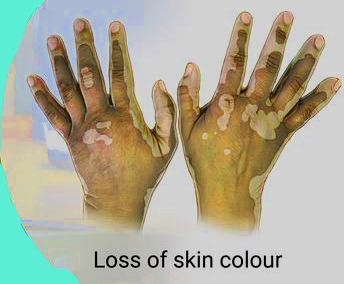
Autoimmune diseases associated with vitiligo

A) Thyroiditis B) Diabetes mellitus
C) Psoriasis D) All of the above
 
Answer & Explanation Answer: D) All of the above

Explanation:

Vitiligo is a condition in which the skin loses its pigment cells (melanocytes). This can result in discolored patches in different areas of the body, including the skin, hair, retina and mucous membranes.

vitiligo1531457140.jpg image

Many disorders have been linked to vitiligo. They are::

Hashimoto thyroiditis,

Graves disease,

Addison disease and

diabetes mellitus,

alopecia areata,

pernicious anemia,

inflammatory bowel disease,

psoriasis, and

autoimmune polyglandular syndrome.

Report Error

View Answer Report Error Discuss

Filed Under: Biology
Exam Prep: AIEEE , Bank Exams
Job Role: Analyst , Bank PO

4 2284
Q:

What is the average Life span of RBC?

A) 120 days B) 99 days
C) 101 days D) 111 days
 
Answer & Explanation Answer: A) 120 days

Explanation:

The average Life span of RBC is 120 days.

Report Error

View Answer Report Error Discuss

Filed Under: Biology
Exam Prep: AIEEE , Bank Exams , CAT , GATE
Job Role: Analyst , Bank Clerk , Bank PO

2 2284
Q:

Which of the following vitamins is synthesized by intestinal bacteria?

A) Vitamin B B) Vitamin A
C) Vitamin D D) Vitamin K
 
Answer & Explanation Answer: D) Vitamin K

Explanation:

Most of the Vitamin K is synthesized by intestinal bacteria in the large intestine.

Report Error

View Answer Report Error Discuss

Filed Under: Biology
Exam Prep: AIEEE , Bank Exams
Job Role: Analyst , Bank Clerk , Bank PO

3 2284