CAT Questions

Q:

Origins of genetic variation

A) intragenic recombination B) mutation
C) reticulation D) All the above
 
Answer & Explanation Answer: D) All the above

Explanation:

Random mutations are the ultimate source of genetic variation. Mutations are likely to be rare and most mutations are neutral or deleterious, but in some instances, the new alleles can be favored by natural selection. Polyploidy is an example of chromosomal mutation.


Mutations are changes in the DNA. A single mutation can have a large effect.

1) mutation - an alteration in DNA sequence, various types

2) intragenic recombination - results in entirely new associations of genes not present in either parental genome.


Two forms of intragenic recombination:

a) crossing over
b) independent assortment
3) reticulation – acquisition of genetic material from unrelated or relatively unrelated sources (e.g., hybrid species, horizontal gene transfer).

Report Error

View Answer Report Error Discuss

Filed Under: Biology
Exam Prep: AIEEE , Bank Exams , CAT
Job Role: Analyst , Bank Clerk , Bank PO

3 3441
Q:

Kargil Fight held in

A) 1979 B) 1989
C) 1999 D) 1969
 
Answer & Explanation Answer: C) 1999

Explanation:

The Kargil War, also known as the Kargil conflict, was an armed conflict between India and Pakistan that took place between May and July 1999 in the Kargil district of Kashmir and elsewhere along the Line of Control (LOC). In India, the conflict is also referred to as Operation Vijay.

Report Error

View Answer Report Error Discuss

Filed Under: Indian History
Exam Prep: AIEEE , Bank Exams , CAT
Job Role: Analyst , Bank Clerk , Bank PO

3 3440
Q:

The pioneer of Communism in India was

A) M.N.Roy B) Nalin Gupta
C) M.R.Jayakar D) S.A.Dange
 
Answer & Explanation Answer: A) M.N.Roy

Explanation:

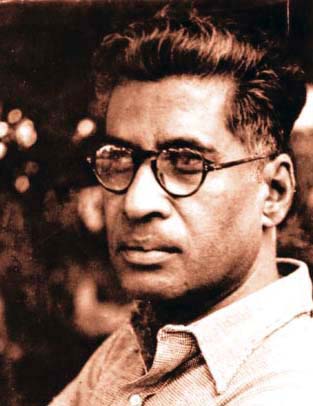
Manabendra Nath Roy, known as M.N. Roy was an Indian revolutionary, radical activist and political theorist, as well as a noted philosopher in the 20th century. Roy was a founder of the Mexican Communist Party and the Communist Party of India.

The_pioneer_of_Communism_in_India1560343205.jpg image

Report Error

View Answer Report Error Discuss

Filed Under: Indian History
Exam Prep: AIEEE , Bank Exams , CAT
Job Role: Analyst , Bank Clerk , Bank PO

13 3440
Q:

Obsession is to compulsion as cognition is to 

A) behavior B) emotion
C) Compulsion D) None of the above
 
Answer & Explanation Answer: A) behavior

Explanation:

Obsession is to compulsion as cognition is to behavior.

Report Error

View Answer Report Error Discuss

Filed Under: Analogy
Exam Prep: AIEEE , Bank Exams , CAT , GATE , GRE , TOEFL
Job Role: Analyst , Bank Clerk , Bank PO

1 3438
Q:

Study of sound is called

A) Agronomy B) Accoustics
C) Aesthetics D) Aeronautics
 
Answer & Explanation Answer: B) Accoustics

Explanation:

Accoustics is a subject deals with the Study of sound


Aesthetics is a Philosophy of fine arts


The science or art of flight is called Aeronautics


The science of soil management is called Agronomy.

Report Error

View Answer Report Error Discuss

Filed Under: General Awareness
Exam Prep: AIEEE , Bank Exams , CAT , GATE
Job Role: Analyst , Bank Clerk , Bank PO

7 3435
Q:

Which animal dont have vocal cords?

A) Dog B) Horse
C) Giraffe D) Donkey
 
Answer & Explanation Answer: C) Giraffe

Explanation:

Giraffe have no vocal cords.

Report Error

View Answer Report Error Discuss

Filed Under: Animals and Birds
Exam Prep: AIEEE , Bank Exams , CAT
Job Role: Analyst , Bank Clerk , Bank PO

8 3435
Q:

Which among the following is NOT a function of RBI? 

A) Serve as debt manager to other banks B) To work as monetary authority and implement its Monetary Policy
C) Serve as banker to central and state governments D) To serve as issuer of bank notes
 
Answer & Explanation Answer: A) Serve as debt manager to other banks

Explanation:

Serve as debt manager to other banks is not a function of RBI Bank.

Report Error

View Answer Report Error Discuss

Filed Under: Indian Economy
Exam Prep: AIEEE , Bank Exams , CAT
Job Role: Analyst , Bank Clerk , Bank PO

5 3434
Q:

Which article describes the importance of Free & Compulsory Education for children between 6-14 years in India?

A) 21A B) 21B
C) 21C D) 21D
 
Answer & Explanation Answer: A) 21A

Explanation:

The Right of Children to Free and Compulsory Education Act or Right to Education Act (RTE) which describes the importance of free and compulsory education for children between 6 and 14 in India is enacted under Article 21A of the Indian Constitution.

Report Error

View Answer Report Error Discuss

Filed Under: Indian Politics
Exam Prep: AIEEE , Bank Exams , CAT , GATE
Job Role: Analyst , Bank Clerk , Bank PO

29 3433