Chemistry Questions

Q:

Which of the following is the most stable carbocation?

Screenshot_(8)1522302473.png image

A) 4 B) 3
C) 2 D) 1
 
Answer & Explanation Answer: C) 2

Explanation:

Here the most stable carbocation is the option (2).


Carbocations are always hungry for electrons. The stability of carbocations increases from primary to secondary to tertiary. Here, option (c) shows the most stable carbocation because it can easily withdraw electrons from two other carbon atoms and the more electronegative oxygen atom.


Carbocation stability depends on hyperconjugation. The tertiary carbocation is stabilized by electron releasing inductive effect.

Report Error

View Answer Report Error Discuss

Filed Under: Chemistry
Exam Prep: AIEEE , Bank Exams , GATE
Job Role: Analyst , Bank Clerk , Bank PO

12 9229
Q:

An electrically charged atom or group of atoms is called

A) An ion B) A meson
C) A electron D) None of the above
 
Answer & Explanation Answer: A) An ion

Explanation:

An electrically charged atom or group of atoms formed by the loss or gain of one or more electrons is called an Ion.

Cation:

An ion is a cation (positive ion) if it is created by electron loss and is attracted to the cathode in electrolysis.

Anion:

An ion is an anion (negative ion) if it is created by an electron gain and is attracted to the anode.


The valence of an ion is equal to the number of electrons lost or gained and is indicated by a plus sign for cations and a minus sign for anions.

Ex: Na +, Cl−, Ca ++,...

Report Error

View Answer Report Error Discuss

Filed Under: Chemistry
Exam Prep: AIEEE , Bank Exams
Job Role: Analyst , Bank Clerk , Bank PO

11 9215
Q:

Species containing same number of electrons are called

A) Isotopes B) Isobars
C) Isoelectronic D) Isotones
 
Answer & Explanation Answer: C) Isoelectronic

Explanation:
Report Error

View Answer Report Error Discuss

Filed Under: Chemistry

24 9209
Q:

Which of these illustrates the Secondary Structure of a Protein?

chemistry1519110232.jpg image

A) A B) B
C) C D) D
 
Answer & Explanation Answer: B) B

Explanation:

The Secondary Structure of a Protein is option B)


The Secondary Structure of a Protein results from Hydrogen Bonds.

Report Error

View Answer Report Error Discuss

Filed Under: Chemistry
Exam Prep: AIEEE , Bank Exams , GATE
Job Role: Analyst , Bank Clerk , Bank PO

2 9183
Q:

Which of the following is not a property of water?

A) Low density B) Low specific heat
C) Low heat of vaporisation D) All of the above
 
Answer & Explanation Answer: D) All of the above

Explanation:

Water can moderate temperature because of the two properties: high-specific heat and the high heat of vaporization. 


Hence, all the above given options are not the properties of water.

Report Error

View Answer Report Error Discuss

Filed Under: Chemistry
Exam Prep: AIEEE , Bank Exams
Job Role: Analyst , Bank Clerk , Bank PO

4 9160
Q:

Which one of the following is an element?

A) Topaz B) Rruby
C) Diamond D) Sapphire
 
Answer & Explanation Answer: C) Diamond

Explanation:

Here in the given options, Diamond is an element as it is the allotrope of the carbon atom.

Report Error

View Answer Report Error Discuss

Filed Under: Chemistry
Exam Prep: AIEEE , Bank Exams , CAT , GATE
Job Role: Analyst , Bank Clerk , Bank PO

14 9137
Q:

The charge on positron is equal to the charge on

A) proton B) electron
C) alpha- particle D) neutron
 
Answer & Explanation Answer: A) proton

Explanation:
Report Error

View Answer Report Error Discuss

Filed Under: Chemistry

19 9037
Q:

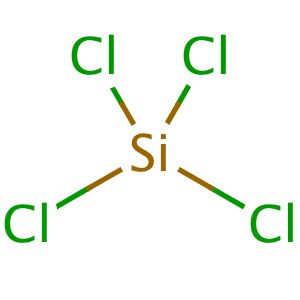
Is SiCl4 polar or nonpolar?

A) Polar B) non polar
C) Both A & B D) None of the above
 
Answer & Explanation Answer: B) non polar

Explanation:

SiCl4 is a non polar as the forces of attraction between the shared pair of electrons are equal and the molecule is symmetric.

is_sicl4_polar_or_nonpolar1537793915.jpg image

Report Error

View Answer Report Error Discuss

Filed Under: Chemistry
Exam Prep: AIEEE , Bank Exams , CAT , GATE
Job Role: Analyst , Bank Clerk , Bank PO

7 9017