Questions

Q:

Cinematography was invented by

A) Graham Bell B) Edison
C) Zeiss D) Faraday
 
Answer & Explanation Answer: B) Edison

Explanation:
Report Error

View Answer Report Error Discuss

Filed Under: Inventions

20 11843
Q:

The metal which reacts most violently with with cold water is

A) calcium B) sodium
C) magnesium D) potassium
 
Answer & Explanation Answer: D) potassium

Explanation:

Potassium reacts violently with water liberating hydrogen. The reaction is so violent that the liberated hydrogen catches fire.

Report Error

View Answer Report Error Discuss

Filed Under: Chemistry

47 11829
Q:

Lichens are the best indicator of

A) Air pollution B) Sound pollution
C) Noise pollution D) Water pollution
 
Answer & Explanation Answer: A) Air pollution

Explanation:

1. Lichens are plants that grow in exposed places such as rocks or tree bark.


2.  Lichens are widely used as environmental indicators or bio-indicators. They can be used as air pollution indicators, especially of the concentration of sulfur-di-oxide in the atmosphere.  


3. They need to be very good at absorbing water and nutrients to grow there.

Report Error

View Answer Report Error Discuss

30 11824
Q:

World Town Planning Day (WTPD) is celebrated on


A) 8 November B) 23 November
C) 21 November D) 7 November
 
Answer & Explanation Answer: A) 8 November

Explanation:

World Town Planning Day (WTPD) also known as World Urbanism Day is celebrated on 8 November.


Report Error

View Answer Report Error Discuss

Filed Under: Important Days and Years
Exam Prep: Bank Exams

3 11815
Q:

Who invented Radar?

A) Henrey Backquerel B) Max Planck
C) Robert Watson Watt D) Humphrey Davy
 
Answer & Explanation Answer: C) Robert Watson Watt

Explanation:

Who_invented_Radar1556273104.jpg image

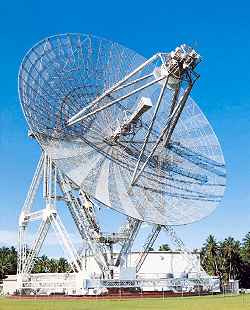
RADAR stands for Radio Detection and Ranging.

Radar is a detecting system that uses radio waves to determine the range, angle, or velocity of objects. It operates in the ultra-high-frequency of the radio-frequency (RF) spectrum.


Uses ::

To detect

aircraft,

ships,

spacecraft,

guided missiles,

motor vehicles,

weather formations, and

terrain.

Report Error

View Answer Report Error Discuss

Filed Under: Inventions
Exam Prep: CAT , Bank Exams , AIEEE
Job Role: Bank PO , Bank Clerk , Analyst

18 11802
Q:

What will you do when a customer is abusive/irritated?

Answer

When you work at a call center you will come across irritated, angry, and abusive customers, you can say you will do that following to handle them:


-  Listen to them and empathize with their situation


-  Apologize and take ownership of the problem and give a solution


-  Approach them and ask for a reason for their displeasure


-  If they insist on talking to your manager, get him on line ASAP


- Follow up after giving the solution and ask for feedback

Report Error

View answer Workspace Report Error Discuss

Subject: Call Center

13 11795
Q:

"Senses are the gateways of knowledge" was emphasised by

A) Gurunanak B) Rousseau
C) Confucius D) Mahaveera
 
Answer & Explanation Answer: B) Rousseau

Explanation:

The Five senses that we have are: Sight, smell, hear, touch and taste. Rousseau emphasised that "Senses are the gateways of knowledge".

Report Error

View Answer Report Error Discuss

Filed Under: Famous Personalities
Exam Prep: AIEEE , Bank Exams
Job Role: Analyst , Bank Clerk

16 11793
Q:

What kind of crystalline solid is graphite?

A) Metallic B) Ionic
C) Molecular D) Covalent- network
 
Answer & Explanation Answer: D) Covalent- network

Explanation:

Graphite is a covalent-network type of crystalline solid.


There are two main categories of solids.

1. Crystalline solids and

2. Amorphous solids.

Crystalline solids are those in which the atoms, ions, or molecules that make up the solid exist in a regular, well-defined arrangement.

There are four types of crystalline solids :


Ionic solids :— Made up of positive and negative ions and held together by electrostatic attractions. They’re characterized by very high melting points and brittleness and are poor conductors in the solid state. An example of an ionic solid is table salt, NaCl.

Molecular solids :— Made up of atoms or molecules held together by London dispersion forces, dipole-dipole forces, or hydrogen bonds. Characterized by low melting points and flexibility and are poor conductors. An example of a molecular solid is sucrose.

Covalent-network (also called atomic) solids :— Made up of atoms connected by covalent bonds; the intermolecular forces are covalent bonds as well. Characterized as being very hard with very high melting points and being poor conductors. Examples of this type of solid are diamond and graphite, and the fullerenes. As you can see below, graphite has only 2-D hexagonal structure and therefore is not hard like diamond. The sheets of graphite are held together by only weak London forces!

Metallic solids :— Made up of metal atoms that are held together by metallic bonds. Characterized by high melting points, can range from soft and malleable to very hard, and are good conductors of electricity.

Report Error

View Answer Report Error Discuss

Filed Under: Physics
Exam Prep: AIEEE , Bank Exams , CAT , GATE , GRE
Job Role: Analyst , Bank Clerk , Bank PO

16 11790